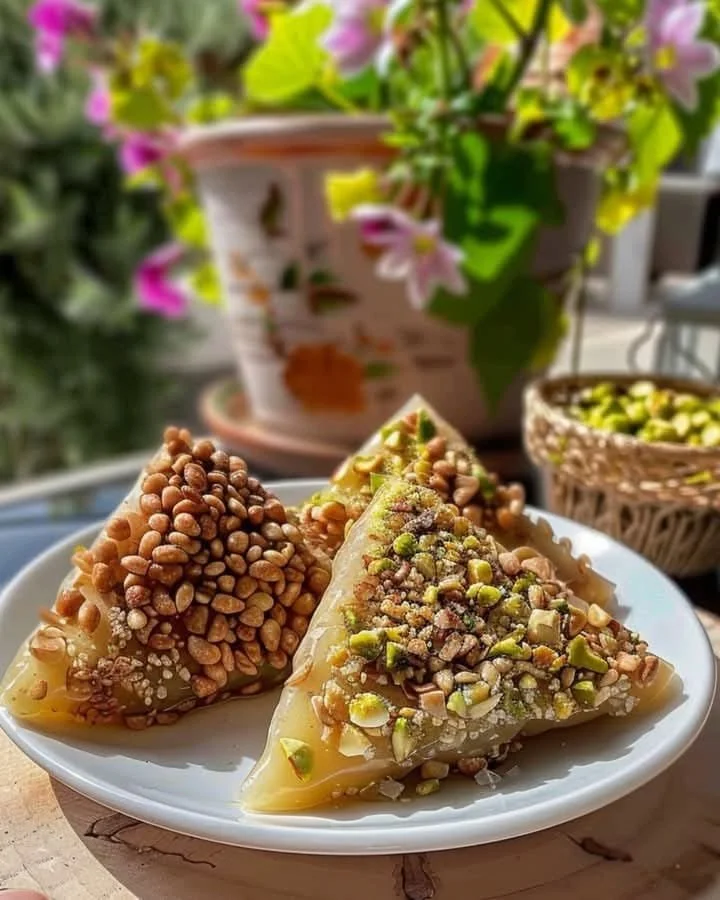
Tunisian Samsa, a delightful pastry that beautifully blends tradition and flavor, stands out with its rich history and delicious filling. This recipe is perfect for anyone looking to create a mouthwatering treat that’s both comforting and satisfying. With aromas of roasted nuts and sweet syrup wafting through your kitchen, making Tunisian Samsa is an experience that will evoke nostalgia and warmth. Plus, it’s a step-by-step process that anyone can follow, making it an ideal choice for family gatherings or a cozy afternoon snack.
Ingredients
500g of sugar creates that perfect sweetness that binds it all together. The 1/2 liter of water mixes to form a luscious syrup, while a few flower petals add floral undertones to each heavenly bite. The juice of half a lemon brings brightness and zest, balancing the rich flavors in a harmonious dance. For the filling, 300g of hazelnuts and 150g of almonds provide that nutty crunch that makes these pastries unforgettable. A light dusting of 60g of icing sugar elevates the sweetness, and the optional tablespoon of hazelnut paste adds a deeper richness to your stuffing. To transform various creations, hazelnut butter or regular butter are vital, with chopped pistachios, hazelnuts, and almonds served as decoration to finish each piece off elegantly.
Step-by-Step Directions
- Prepare the syrup by boiling sugar, water, flower petals, and lemon juice together. Let it cool.
- For the stuffing, mix hazelnuts, almonds, icing sugar, and hazelnut paste (if using). Add enough hazelnut or regular butter to form a paste.
- Roll the mixture into balls weighing about 13g each.
- Cut pastry strips into 6 or 5 cm widths.
- Spread each strip with hazelnut butter.
- Place a ball of filling on one end of each strip, roll it up, and seal the edges.
- Bake until golden brown.
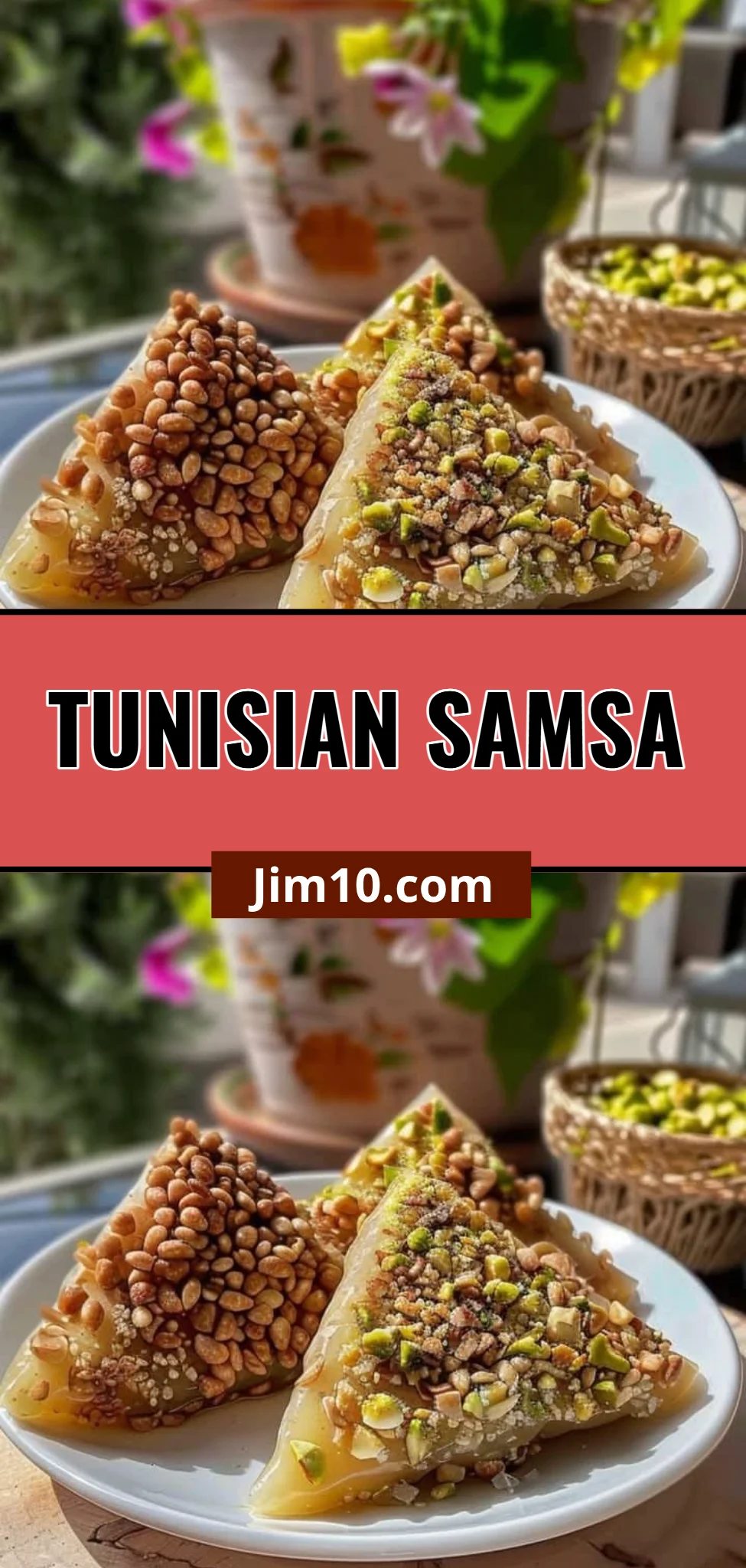
- Once cooled, drizzle with syrup and sprinkle with chopped pistachios, hazelnuts, and almonds for decoration.
Tips & Tricks
To enhance your Tunisian Samsa, ensure your pastry is fresh and not too thick, as this will create a crispier texture. If you want a more intense flavor, roast the hazelnuts and almonds beforehand; this will enhance their natural oils and deepen the nutty flavor. Additionally, when forming the balls, make sure they are compact so they hold together well during baking.
Serving Suggestions & Pairings
Tunisian Samsa is perfect for any occasion, from family gatherings to festive celebrations. Serve these delectable pastries warm alongside traditional mint tea or coffee for a delightful afternoon treat. They also make for an excellent dessert after a hearty meal, balancing heavier dishes with their light and sweet profile. Pair them with a simple fruit salad for a refreshing contrast.
Nutritional Information
Each serving of Tunisian Samsa contains approximately 250 calories, depending on the ingredients used and the serving size. They’re also a source of protein and healthy fats thanks to the nuts, providing essential nutrients. As with any treat, moderation is key to enjoying these pastries while maintaining a balanced diet.
Storing Tips & Variations
To maintain their freshness, store Tunisian Samsa in an airtight container at room temperature for up to three days. For longer storage, freeze the unbaked rolls; simply bake them from frozen when you’re ready to enjoy. You can also experiment with different nuts or add dried fruits to the filling for a unique twist on this classic recipe.
Conclusion
Making Tunisian Samsa is not just about following the recipe; it’s an opportunity to embrace the rich flavors and traditions of Tunisian cuisine. The process is straightforward and rewarding, yielding delicious results that your family and friends will adore. So, gather your ingredients, follow the steps, and enjoy sharing this delightful treat. Don’t forget to let me know how your Tunisian Samsa turns out!
FAQs
-
Can I use other nuts besides hazelnuts and almonds?
Absolutely! Feel free to experiment with walnuts, pistachios, or pecans to add your favorite flavors. -
Is there a gluten-free option for the pastry?
Yes, you can use gluten-free flour to make the pastry strips to suit your dietary preferences. -
How can I make the syrup thicker?
To make a thicker syrup, boil it longer until it reaches your desired consistency. Just be sure to keep an eye on it to avoid burning. -
Can I prepare these in advance?
Yes, you can make the Samsa a day in advance, but it’s best to store them in a cool place and drizzle with syrup just before serving. -
What’s the best way to serve Tunisian Samsa?
These pastries are best served warm with a light sprinkle of chopped nuts on top, enhancing their delicious texture and adding that extra visual appeal.
Enjoy your culinary adventure with Tunisian Samsa—each bite is a taste of tradition worth celebrating!